Finnova Foundation presents the European project RAICES at the Regional Erasmus+ Week 2026 in Mexico City.
- Mexico City hosted the Regional Erasmus+ Week for Latin America and the Caribbean, bringing together European institutions, universities and international stakeholders to strengthen educational cooperation, skills development and sustainable growth.
- Finnova Foundation, the only Belgian organisation represented at the event presented RAICES, an Erasmus+ project promoting sustainable entrepreneurship, digital transformation and vocational training in the textile and footwear sectors in Colombia and Peru.

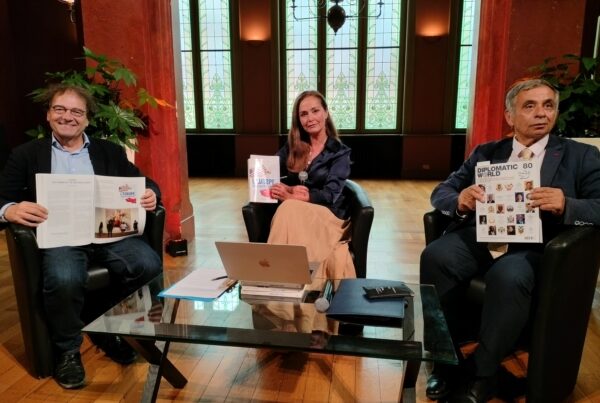
Picture of the roundtable Widening the Skills Base for Key Global Gateway Value Chains.
From 6 to 8 October 2026, Mexico City became a meeting point for international educational cooperation with the celebration of the Regional Erasmus+ Week for Latin America and the Caribbean, an initiative organised by the European Commission’s Directorate-General for Education, Youth, Sport and Culture and the European Education and Culture Executive Agency (EACEA), in collaboration with the Delegation of the European Union to Mexico and with the support of the Mexican National Association of Universities and Higher Education Institutions (ANUIES).
Under the theme “Developing Skills for the Future”, the event brought together representatives of European institutions, universities, vocational education and training organisations, public authorities and international cooperation networks to explore how education and skills can contribute to economic transformation, social inclusion and sustainable development.
The initiative reflected the growing strategic importance of relations between the European Union and Latin America and the Caribbean, particularly in the context of the EU’s Global Gateway investment strategy and the Union of Skills. Both frameworks recognise education, innovation and human capital as essential foundations for competitiveness, resilient economies and inclusive growth.
The Regional Erasmus+ Cluster Meeting and Contact-Making Seminar provided a platform for exchanging experiences, presenting European-funded projects and establishing partnerships capable of connecting local development priorities with international cooperation opportunities.
A significant contribution came from the Brussels-based Finnova Foundation, the only Belgian organisation participating in the event. Represented by Juan Viesca, Director of European Funds of Finnova, reinforced its commitment to strengthening cooperation between Europe and Latin America through European funding, innovation, entrepreneurship and capacity building.
Viesca participated as a speaker in the thematic session “Widening the Skills Base for Key Global Gateway Value Chains”, held on 6 October and dedicated to exploring how Erasmus+ projects can expand access to skills and employment opportunities for communities facing structural economic and social challenges.
The session was moderated by Luisa Bunescu, Education Policy Officer at the European Commission’s Directorate-General for International Partnerships (DG INTPA). The panel brought together Lorena del C. Ramos, from the Technological University of Panama, representing the FIDUCA project; Juan Viesca, from Finnova Foundation, representing RAICES; and Professor Angelica Reyes Mendoza, from the Autonomous University of Baja California, Mexico, representing the AMARU project.
The discussion highlighted the contribution of European cooperation programmes to strengthening human capital in strategic sectors, improving the relevance of education and training systems, and ensuring that opportunities generated by economic transformation reach communities traditionally excluded from international value chains.
Within this framework, Juan Viesca presented RAICES, an Erasmus+ Capacity Building in Vocational Education and Training project designed to strengthen the textile, footwear and traditional craftsmanship sectors in Colombia and Peru.
The initiative addresses several structural challenges affecting artisanal communities, including limited access to specialised training, insufficient digitalisation, informal employment, barriers to entrepreneurship and the progressive loss of traditional production techniques.
RAICES seeks to transform these challenges into opportunities by connecting European expertise with local knowledge, promoting sustainable production methods and strengthening the capacity of vocational education and training institutions to respond to the needs of local economies.
A distinctive feature of the project is its combination of cultural heritage preservation, green transition, digital skills and entrepreneurship. Rather than treating traditional craftsmanship as an activity disconnected from technological progress, RAICES promotes a development model in which ancestral knowledge becomes a source of innovation, competitiveness and sustainable economic opportunities.
The project includes the development of specialised training curricula, capacity-building activities for educators and trainers, digital learning resources, collaborative innovation initiatives and entrepreneurship support mechanisms. Particular attention is given to women and young people, whose participation is essential to ensuring the continuity and economic viability of traditional artisanal activities.
Another important component is the RAICES Hub, an open digital platform designed to increase the visibility of artisanal communities, facilitate access to educational resources and connect producers, designers, institutions and potential commercial partners.
Through its innovation and entrepreneurship activities, including the Renacer Artesano initiative, RAICES also aims to encourage new business models that combine cultural identity with environmental responsibility, digital transformation and access to sustainable markets.
The project illustrates how Erasmus+ can contribute to the objectives of Global Gateway beyond infrastructure and investment, by developing the skills, institutions and entrepreneurial ecosystems needed to ensure that international economic cooperation generates tangible benefits for local communities.
For Finnova Foundation, participation in Mexico City provided an opportunity to reinforce its role as a bridge between European institutions and Latin American innovation ecosystems. With its experience in European funding programmes, international partnerships and sustainable entrepreneurship, the foundation promotes cooperation models capable of translating European policies into practical initiatives with territorial impact.
The exchanges during the Erasmus+ Regional Week also underlined the importance of strengthening partnerships between universities, vocational training centres, businesses and public authorities. Such cooperation is essential to adapting education systems to technological change, promoting employability and creating more inclusive and sustainable value chains.
The participation of Finnova and the presentation of RAICES demonstrated how European programmes can support development models in which economic competitiveness, social inclusion and cultural heritage are mutually reinforcing objectives.
More than an international educational gathering, the Regional Erasmus+ Week 2026 confirmed the importance of education and skills as instruments of international cooperation and economic diplomacy.
By connecting European expertise with the needs and aspirations of Latin American communities, initiatives such as RAICES contribute to building a renewed partnership between the European Union and Latin America and the Caribbean: one based on shared knowledge, sustainable innovation, cultural diversity and opportunities for future generations.
Further information about RAICES project: https://raicesproject.eu/
Further information about Finnova: https://finnova.eu/