A New Era of Revolutionary CyberSecure Communications for Diplomacy and Government Institutions Worldwide.
Their Vision Is Simple
Trust Must Be Built Into the Hardware, Not Assumed by the Software.
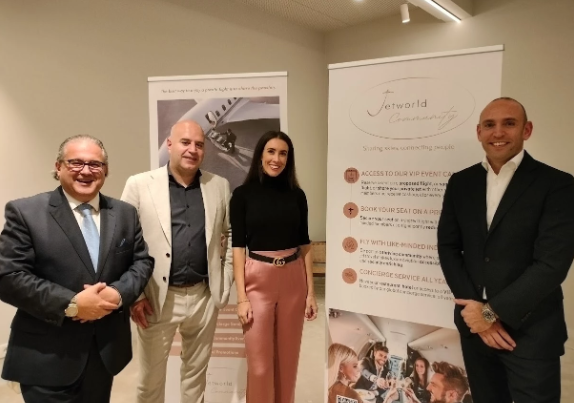
Omnicloak at the European Committee of the Regions in Brussels European Capital
INTERVIEW

“Message To Young Hackers”
Omnicloak at the European Committee of the Regions in Brussels European Capital
“Midnight In The War Room”
Who Is Eric Taylor?
Eric Taylor, widely known as alias “Cosmo The God”, is a former-hacker and ICT expert with a passion for technology, cybersecurity, and digital innovation. Known for his interest in exploring complex systems and understanding the digital world, he represents a mindset built on curiosity, technical knowledge, and thinking beyond conventional boundaries. Through his work and expertise, Eric Taylor embodies the ever evolving intersection of technology, security, and the digital underground.
FROM TECHNICAL PROMISE TO PROVEN VALUE
Cybercrime is estimated to cost the global economy €9.7 trillion annually in 2025, potentially rising to €11.3 trillion by 2031 (Cybersecurity Ventures). Meanwhile, global information-security spending is forecast to reach approximately €197 billion in 2025 and €222 billion in 2026 (Gartner). Beyond the economic impact, digital risks also affect young people’s well-being: according to the World Health Organization (WHO), one in seven adolescents aged 10–19 experiences a mental disorder. Looking ahead, the United Nations has designated 2027 as the International Year of Sustainable and Resilient Tourism, highlighting the importance of building a more sustainable and resilient future.
Therefore OmniCloak is developing a new approach to cybersecurity by establishing digital trust at the hardware level rather than relying solely on software-based protection. Its mission is to help protect sensitive data, devices, and communications against increasingly sophisticated cyber threats, including attacks targeting firmware and operating systems.
Through a six-layer security architecture combining hardware-based identity, continuous firmware integrity verification, operating system hardening, cryptographic attestation, secure connectivity, and AI-powered threat monitoring, OmniCloak aims to make device security more robust, transparent, and independently verifiable.
The company is developing secure laptops and smartphones designed for organizations with demanding security requirements, including government agencies, defense-related organizations, diplomatic and financial institutions. By integrating proprietary security technology into existing hardware platforms, OmniCloak seeks to deliver a stronger foundation of trust for the next generation of connected devices.
“Their Vision Is Simple: Trust Should Be Established In Hardware, Not Assumed By Software.
OmniCloak is currently in the pre-alpha hardware development stage and is working toward its initial deployment milestone while pursuing strategic partnerships to advance its technology.
QUESTIONS ANSWERED BY ERIC TAYLOR
1. “What fundamental problem led you to conclude that digital trust needs to move below the operating system and into the hardware itself?”
2. “What is genuinely new about OmniCloak’s approach compared with today’s endpoint security solutions and zero,trust architectures?”
3. “Why is a silicon,derived identity based on a Physical Unclonable Function (PUF) fundamentally different from storing cryptographic keys in conventional secure hardware?”
4. “Why does firmware need to be verified continuously rather than only during the initial boot process?”
5. “What changes when network access itself becomes conditional upon successful hardware attestation?”
6. “Why is satellite connectivity an important component of OmniCloak’s security architecture, particularly for diplomatic and governmental environments?”
7. “What can OmniCloak’s AI,driven telemetry potentially detect that conventional endpoint security solutions may not be able to identify?”
8. “From a technical perspective, how does OmniCloak differ from established security technologies such as TPM, Apple’s Secure Enclave and Samsung Knox?”
9. “As OmniCloak is currently still in the pre,alpha stage, which of your key technical assumptions remain to be validated and proven in real,world hardware?”
10. “If OmniCloak succeeds in delivering on its vision, how could it fundamentally change the concept of digital trust over the next decade , and, more specifically, what could this mean for the diplomatic and governmental world?”