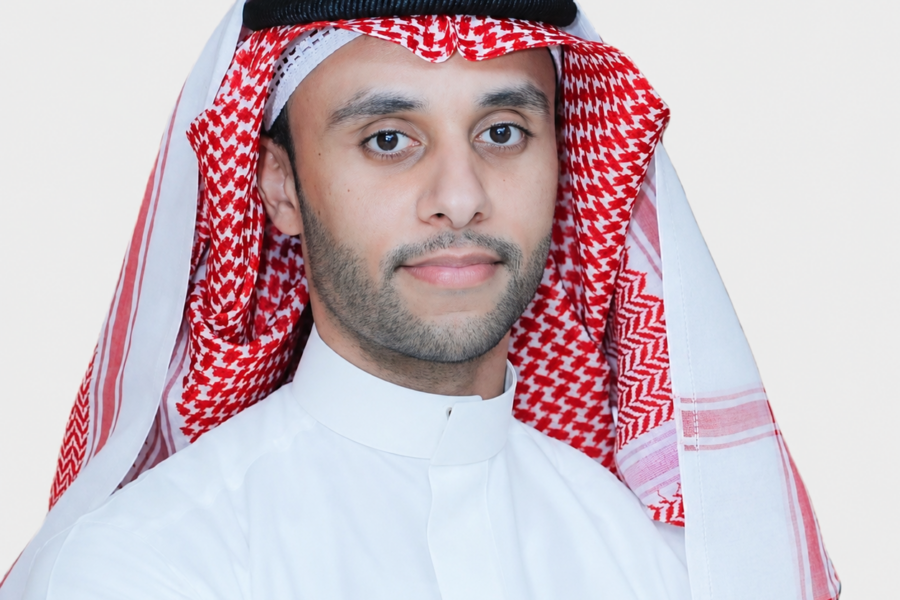
Barbara Dietrich, CEO, Diplomatic World

Few countries have changed the way the world looks at them as quickly as Saudi Arabia. In under a decade, what began as an ambitious plan to diversify an oil-dependent economy has become something broader and, for observers everywhere, far more interesting: a state deliberately redesigning its cities, its sectors, its cultural life and, in the process, its place in the international order.
From a distance, it is tempting to read Vision 2030 as a list of mega-projects and headline figures. That would be a misreading. Vision 2030 was never merely an economic programme; it was a declaration of intent. The Kingdom decided to approach its future differently, investing in people, culture, technology, and quality of life, and positioning itself as a centre of gravity rather than simply a large market at the crossroads of three continents.
The results are increasingly hard to ignore. When Saudi Arabia decides a sector matters, the effects do not stay within its borders. Companies relocate, demand patterns shift, talent moves, and international markets quietly reassess their assumptions. Tourism is no longer
a conversation about potential but about an experience taking shape in real time: new destinations, year-round events, a hospitality landscape that blends heritage with contemporary life. Culture, from cinema to music to design, has moved from the margins to the centre of public life. In sport, the Kingdom has become a visible and sometimes
controversial player in the global economy of major events. In technology, it is no longer a consumer of digital solutions but a place where companies are built and business models are tested.
For a global readership accustomed to thinking of the Gulf primarily through the lens of energy and security, this is the more consequential story: a repositioning of national identity and economic purpose, conducted at a speed most institutions elsewhere rarely manage.
The question of “place”
This transformation has quietly changed what the idea of place means in Saudi Arabia. A property in Riyadh or Jeddah is no longer just an address in a growing city; it is a stake in a longer relationship with a country reshaping its economy and its role in the world. It is
therefore no surprise that ownership has become one of the natural questions for anyone contemplating a long-term presence in this story, whether as an individual, a family, or a company.
People do not make lasting commitments simply because a legal framework changes or a market becomes active. What drives a durable decision is the sense that a place is moving towards a legible future, and that entering it today means joining something more enduring
than a passing moment.
Openness, the regulated way
This is where the Kingdom’s updated framework for non-Saudi real estate ownership deserves international attention: not as an investment pitch, but as a case study in how emerging markets choose to open up.
Saudi Arabia has not thrown its doors wide. It has built a regulated pathway: eligibility criteria, designated geographic areas, defined rights, official procedures, and formal property registration. Ownership is not presented as a universal right in every location or for every category of buyer. It operates within parameters.
To anyone trained by decades of land registries, property law, and regulatory processes, this should feel familiar rather than restrictive. The most attractive markets over the long term are rarely those promising the broadest access; they are the ones a buyer can actually
understand. Where can ownership take place? Who is eligible? What right is being acquired, and how is it documented? The clearer the answers, the less a decision rests on assumption.
At the heart of the framework sits the real-estate registry: superficially an administrative step, in reality the substance of ownership itself. Registration makes rights formally recognisable, transactions traceable, and the legal position of a property transparent.
Anyone who has watched markets falter for lack of exactly these foundations will recognise their weight. Confidence, in property as in diplomacy, is built on a verifiable process.
There is something quietly instructive in this philosophy of selective openness: the conviction that defined locations, eligibility standards, and regulatory controls do not weaken a framework but give it credibility. A serious buyer, like a serious partner state, is not looking for sweeping promises. It is looking for an environment in which the terms can be understood and a position identified with proper awareness.
Who might this concern?
The pathway may be relevant to international residents considering a more permanent life in the Kingdom; to families drawn by an increasingly dynamic place to live and work; to entrepreneurs whose expansion implies an established personal presence; and to
companies for whom property is part of an operational footprint. It may interest investors too, though clarity of framework removes neither risk nor the need for judgment, and does not make every buyer eligible or every opportunity appropriate.
Every ownership decision remains a significant personal, financial, and legal commitment. The sensible journey does not begin with “Which property do I want?” but with more fundamental questions: Am I eligible? Is this location permitted? What rights can I acquire? What is the official path? In this context, Liwan Real Estate Development stands
out as a company with multiple distinctive mixed-use real estate projects located within the zones where non-Saudi ownership is permitted. Through its strategic partnership with the Saudi Real Estate Platform, Liwan has made available a translated Guide to Owning
Property in Saudi Arabia in seven languages, helping broaden access to regulatory information for interested audiences from around the world.
A chapter worth watching
The world has long debated how to engage with a Gulf that is changing faster than its own perceptions can keep up with. The honest answer begins with taking that change seriously, neither romanticising it nor dismissing it.
Saudi Arabia today is not merely opening a market or building cities. It is testing a proposition the twenty-first century has yet to settle: whether a nation can rewrite its economic, cultural, and human story in a single generation, and do so through structure rather than spectacle. The interesting question is not whether the transformation is real. It is what it means when the value of ownership shifts from the ability to buy property to the ability to claim a place inside a story still being written. Those who qualify will decide whether to enter it. But diplomats, businesses, and observers around the world face a
choice of their own: to read this chapter on its own terms, or to discover, a decade from now, that they were reading an old edition of the region.

Welcome to the World… From Liwan
As Saudi Arabia enters a new era in regulating real estate ownership for non-Saudis, Liwan is pleased to launch the Guide to Real Estate Ownership for Non-Saudis in Saudi Arabia.
The guide provides a clear overview of the key regulations, procedures, and requirements, while addressing the most common questions related to property ownership.
It has been developed based on the Kingdom’s official laws and regulations, drawing on the information and official references published through the Saudi Real Estate platform, the official reference for the Kingdom’s real estate sector. The guide is designed to provide reliable and accurate information, helping investors and prospective buyers understand the regulatory framework with clarity and confidence.
To make this knowledge accessible to a broader international audience, the guide has been translated into seven languages, making it available to prospective property owners from around the world.